
The Maharashtra assembly has passed the Freedom of Religion Bill 2026, introducing strict measures to prevent religious conversions through coercion, fraud, or marriage, sparking debate over constitutional rights and religious freedom.

The Chhattisgarh government has introduced a bill in the state assembly to prevent religious conversions carried out through force, inducement, fraud, or misrepresentation. The bill, titled the Chhattisgarh Dharm Swatantraya Vidheyak, 2026 (Freedom of Religion Bill, 2026), aims to curb conversions achieved through coercion or undue influence.

The Maharashtra government has introduced the Maharashtra Freedom of Religion Bill 2026, which aims to prohibit religious conversions carried out through coercion, fraud, or marriage, with stringent penalties for violations.
The Chhattisgarh government has introduced a bill aimed at preventing religious conversions through force, inducement, or misrepresentation, sparking opposition and debate in the state assembly.
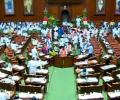
The Karnataka Assembly has passed two significant bills aimed at social reform and heritage preservation: the Karnataka Freedom of Choice in Marriage and Prevention and Prohibition of Crimes in the name of Honour and Tradition Bill, 2026, and the Karnataka Jnana Bhandar Manuscripts and Digitisation Bill, 2026.
The Karnataka Assembly has passed two significant bills aimed at social reform and heritage preservation: the Karnataka Prohibition of Crimes in the Name of Unity, Freedom, Dignity and Tradition in Marriage Bill, 2026, and the Karnataka Jnana Bhandar Manuscripts and Digitisation Act, 2026.

The Gujarat government on Monday withdrew the controversial Freedom of Religion (Amendment) Bill of 2006, which the governor had returned to the Legislative Assembly for reconsideration in August 2007. Governor Nawal Kishore Sharma in his message, read out in the assembly by Speaker Ashok Bhatt while returning the Bill, said he found it to be violative of the Article 25 (A) of the Constitution.

A court in Maharashtra's Nashik district on Monday fixed May 2 for giving its verdict on the anticipatory bail plea filed by TCS employee Nida Khan, an accused in a case related to alleged sexual harassment and forcible religious conversion at the IT firm's local unit.

West Bengal Chief Minister Mamata Banerjee has refuted Prime Minister Narendra Modi's claims about the state's fish production, accusing him of misrepresenting facts and alleging restrictions on non-vegetarian food consumption in BJP-ruled states.

Asha Bhosle's only daughter Varsha Bhosle, who died in 2012, had penned this beautiful ode to her mother.

The Karnataka Legislative Council passed a bill to curb hate speech, facing strong opposition from BJP and JD(S), who criticized it as 'draconian' and a threat to free speech. The bill proposes jail terms and fines for hate crimes and repeated offenses.

'Kashmir needs to be divided and we need the land of Panun Kashmir in Kashmir.'
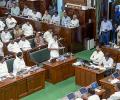
The Tamil Nadu Assembly passed a resolution on Thursday condemning the Centre's proposed Waqf Amendment Bill 2024, calling for its recall. Chief Minister M K Stalin argued that the amendment interferes with religious affairs and would negatively impact the Muslim minority. The resolution was unanimously passed by the Assembly, with support from all parties, including the opposition AIADMK and PMK. The BJP, however, walked out in protest, accusing the ruling DMK of engaging in divisive politics. The bill aims to streamline the Waqf Board's work and ensure efficient management of Waqf properties but has been criticized for potentially encroaching on religious freedom and autonomy. The Tamil Nadu government claims that the amendment would lead to government control over the Waqf Board and its properties, impacting its autonomy and potentially allowing for government acquisition of Muslim-owned lands.

Introducing the bill, Rijiju said the consultation process of the Joint Parliamentary Committee (JPC) was the largest ever exercise carried out by a parliamentary panel in India's democratic history.

A fresh plea has been filed in the Supreme Court challenging the constitutional validity of the Waqf (Amendment) Act, 2025, claiming it was a "blatant intrusion" into the rights of a religious denomination to manage its own affairs in the matter of religion. The plea, filed by Samastha Kerala Jamiathul Ulema, argues that the amendments would distort the religious character of Waqfs and irreversibly damage the democratic process in their administration. Several other petitions have been filed in the apex court challenging the validity of the bill, including those by Congress MP Mohammad Jawed, AIMIM president Asaduddin Owaisi, and AAP MLA Amanatullah Khan.

Chhattisgarh Deputy Chief Minister Vijay Sharma announced plans for a new anti-conversion law following the arrest of two nuns from Kerala on charges related to religious conversion and human trafficking. The announcement comes amid political tensions and accusations of wrongful arrest.

Amid opposition Congress's protest and walkout, the Karnataka legislative assembly on Wednesday okayed the anti-conversion bill, passed by the legislative council last week with minor amendments, that seeks to replace the ordinance that was in place to give effect to the bill.

The 'Karnataka Protection of Right to Freedom of Religion Bill' was passed by the Legislative Assembly in December last.
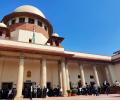
The Supreme Court on Monday agreed to consider listing for urgent hearing the petitions challenging the constitutional validity of the Waqf (Amendment) Act, 2025.
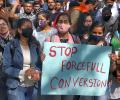
The Centre told the Supreme Court on Monday that religious freedom does not include a fundamental right to convert other people to a particular religion and that it certainly does not embrace the right to convert an individual through fraud, deception, coercion or allurement.
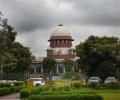
The Supreme Court of India will likely hear a batch of petitions challenging the constitutional validity of the Waqf (Amendment) Act, 2025 on April 15. The Act, which came into force on April 8, has been met with widespread criticism from various stakeholders, including politicians, the All India Muslim Personal Law Board (AIMPLB), and Jamiat Ulama-i-Hind. They argue that the law is discriminatory and violates the fundamental rights guaranteed under Articles 25 and 26 of the Constitution. The petitions allege that the amendments give the government more control over the administration of Waqf, effectively sidelining the Muslim minority from managing their own religious endowments.

The bill to amend the law governing Waqf boards proposes far-reaching changes in the Wakf Act, 1995, including ensuring the representation of Muslim women and non-Muslims in such bodies.

The contentious anti-conversion bill was cleared by the Karnataka Cabinet on Monday and it is most likely to be tabled in the legislative Assembly on December 21, official sources said.

A three-judge Supreme Court bench will hear petitions challenging the constitutional validity of the Waqf (Amendment) Act, 2025, on April 16. The petitions, including those by politicians and the All India Muslim Personal Law Board (AIMPLB) and Jamiat Ulama-i-Hind, were filed in the top court challenging the validity of the newly-enacted law. The Centre has filed a caveat in the apex court, seeking a hearing before any order is passed.

It also cautioned that if the legislation is passed, the "two crutches" on which the Bharatiya Janata Party-led government is running at the Centre would not be able to escape responsibility.

In the last 11 years, India and the world witnessed what he stood for, what he promised and did not deliver, and what he actually stood for and practised without fearing how history would judge him. Modi's tenure has been punctuated with headline-grabbing decisions, symbolic gestures, and stage-managed moments that continue to define his leadership and India's politics, points out Ramesh Menon.
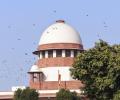
The Indian government defended the Waqf (Amendment) Act, 2025 in the Supreme Court, arguing that waqf, while an Islamic concept, is not an essential part of Islam. Solicitor General Tushar Mehta stated that waqf is essentially charity, which is recognized across religions, and cannot be considered a fundamental tenet of any faith. He also argued that the amended law addresses secular aspects of waqf and activities unrelated to Islam, and that "waqf by user" does not grant ownership of public land. Mehta highlighted the extensive consultations involved in the bill's creation, including feedback from various stakeholders. The hearing will continue on Thursday.

Kharge claimed that the Centre accepted "intelligence failure" in an all-party meeting and said it should be held accountable for "not reinforcing" security arrangements in Kashmir to protect people.

'It is important that the prime minister and our officials here, we dedicate ourselves to that important goal, the concept of freedom of religion for all to worship their faith,' US Congressman Ed Royce tells Aziz Haniffa/Rediff.com
The Himachal Pradesh government on Friday introduced a bill in the state assembly to enhance the punishment and add a specific mention of "mass conversion" in an existing law that forbids change of religion through force or allurement.
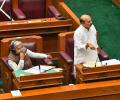
Congress partly vehemently opposed the bill, calling it "anti people", "inhuman", "anti constitutional", "anti poor" and "draconian", and urged that it should not be passed for any reason and should be withdrawn by the government.
Terming forced religious conversion a "very serious" issue, the Supreme Court on Monday asked the Centre to step in and make sincere efforts to check the practice.
State Congress president D K Shivakumar even tore papers on his table, in protest against the introduction of the bill, which his party called 'draconian and anti-constitution'.

'The irony of this country is that the party in Opposition and the party in power both depend on Muslims.'
The Karnataka cabinet on Thursday decided to promulgate an ordinance to give effect to the contentious law against religious conversions.

Major Indian businesses and temples issued a joint statement opposing the proposed California Caste Bill SB 403.

A bill seeking to explicitly ban caste discrimination has been introduced in the California Senate by a Democratic lawmaker, which, if passed, could make America's most populous state also the country's first to outlaw caste-based bias.
The bill was passed in the assembly in December last year but was pending before the council where the ruling Bharatiya Janata Party is one short of a majority.
The Uttarakhand assembly on Wednesday passed a stricter anti-conversion Bill making unlawful conversion a cognisable and non-bailable offence punishable with imprisonment for a term of at least three to a maximum of 10 years.

The government will introduce a bill in this regard in the upcoming legislature session, which starts on July 3.
 © 2026 Rediff.com - Advertise with us - Disclaimer - Privacy Policy - Sitemap - Feedback - About us - Terms of use - Grievances